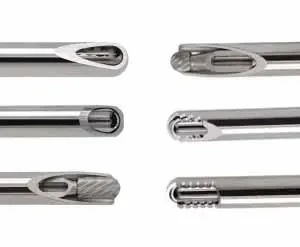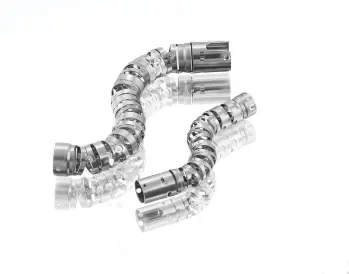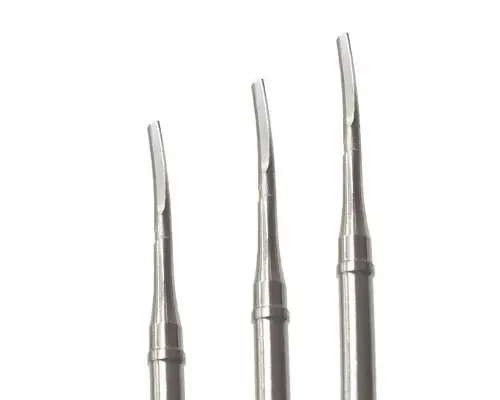
When designing custom endoscopic snake bone assemblies, many customers focus first on minimum outer diameter and maximum bending angle. These are critical specs, but fatigue life and welding integrity are often the hidden bottlenecks that decide whether a component can pass device validation.
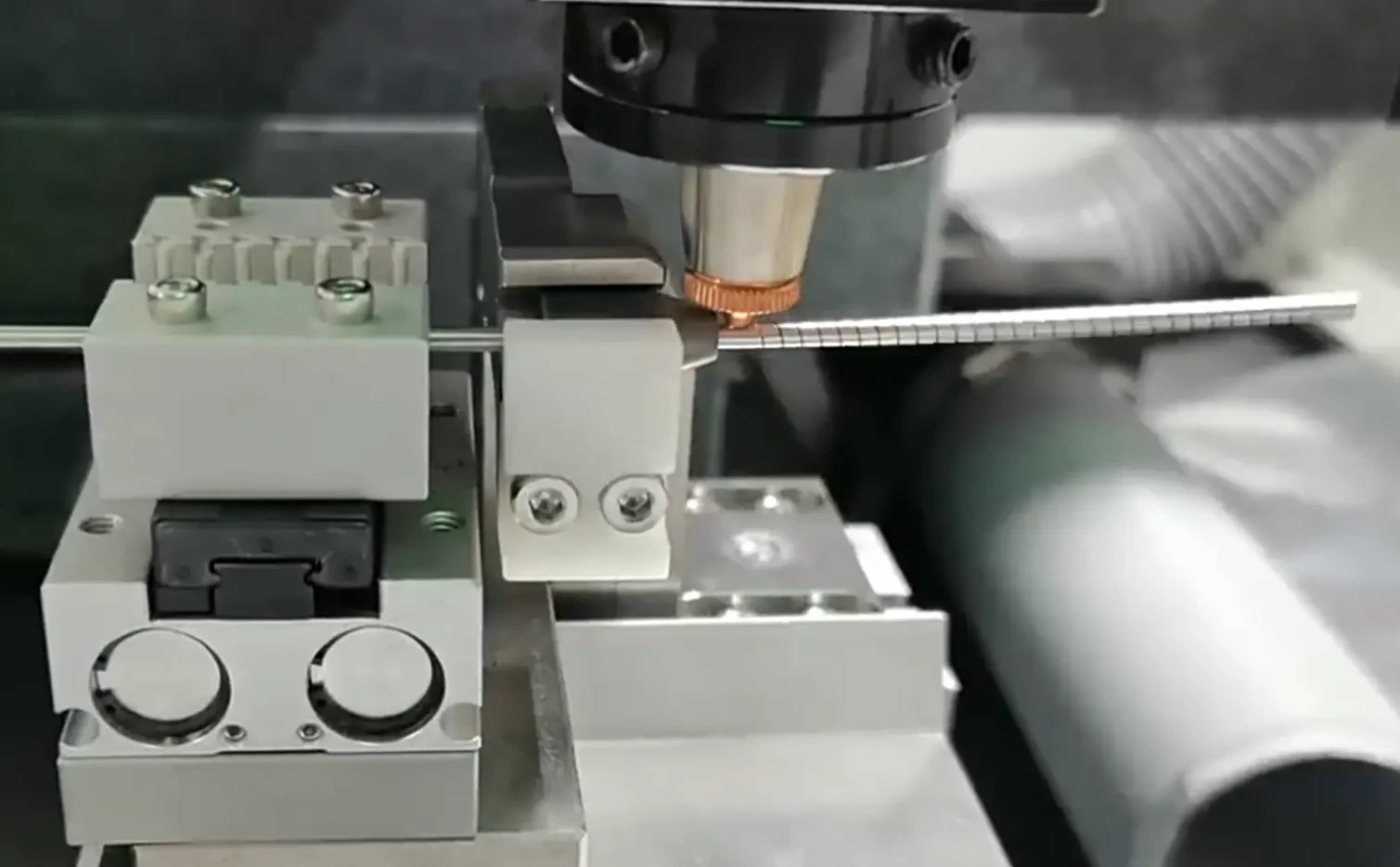
Most snake bone structures we machine are laser welded from small stainless steel articulation segments. Each weld joint becomes a stress concentration point. Even if the prototype bends smoothly on the bench, repeated cycles of flexion and torsion during clinical use can create microcracks along weld seams. We have seen customer samples where the design looked good on drawings, yet failed cycle testing after only a few hundred bending runs.
Material selection also plays a big role. 304 stainless steel is common for low-cost disposable assemblies, while 316L is preferred for reusable devices that go through repeated autoclave sterilization. Sterilization cycles introduce thermal stress, which will slowly change the mechanical performance of the flexible section over time. We always ask clients to share their intended sterilization method early in the quoting phase, instead of locking material choices before knowing the full use case.
Another frequent discussion point is inner channel size. Customers sometimes push for the thinnest possible wall to save space for instrument channels. But thinner walls reduce tensile strength and make the whole snake bone more prone to deformation under pull force. There is no universal “best” design here; we balance outer diameter, inner lumen, bending range and cycle life according to the customer’s functional requirements.
Our internal process includes 100% visual inspection of welds, sample fatigue cycle testing, and full batch traceability. Every production lot links back to raw material certificates, machining logs and inspection records. If a failure occurs during the customer’s validation, we can trace it back to the exact welding run and machine set.
If you are developing a flexible endoscopic device and need custom snake bone bending sections, send over your drawing and required cycle test target. We can review the design for manufacturability before formal production.
Paragraph 3 · Registration Holder Model And Component Suppliers
Paragraph 4 · Registration Holder Model And Component Suppliers
Paragraph 5 · Registration Holder Model And Component Suppliers
Paragraph 6 · Registration Holder Model And Component Suppliers
Paragraph 7 · Registration Holder Model And Component Suppliers
Paragraph 8 · Registration Holder Model And Component Suppliers